
Coolgardie is one of the places where the Goldfields story suddenly becomes real. Kalgoorlie grew richer and larger, but Coolgardie was the earlier shock. It was the camp that made people believe the inland goldfields could change Western Australia.
Today Coolgardie is quiet enough that you can hear a truck pass on Bayley Street and then the town settles again. That is part of its value. The buildings are still there, the street is still wide, the old public spaces still make sense, but the rush has gone. If you want to understand the difference between the Goldfields as a living region and the Goldfields as a boom-time dream, Coolgardie is one of the best places to stand.
The town began with gold in 1892, when Arthur Bayley and William Ford found rich quartz gold in the area. The find became known as Bayley's Reward and helped trigger the rush that pushed people east in huge numbers. Before long, names such as Fly Flat and Bayley's Reward gave way to Coolgardie. The name is usually linked to an Aboriginal word connected with a waterhole or a hollow among mulga, which is worth remembering because water mattered here long before gold did.
Before Coolgardie was a town
It is easy to talk about gold rush towns as if they began the moment a prospector found colour in the ground. They did not. The country around Coolgardie had long been known and used by Aboriginal people, with water places, tracks and names already part of the landscape. European explorers and pastoral searchers moved through parts of the region before the big rush, often looking less for gold than for water, feed and a way through hard country.
That matters because Coolgardie's later story depends on water as much as metal. Gold drew the crowds, but water decided who could stay. The old town was crowded with animals, carts and tents, amid dust, sickness and heat. Modern Coolgardie can feel sparse, but the old town was crowded in ways that are hard to picture from the footpath.
The boom years
By the late 1890s, Coolgardie was not a sleepy mining camp. The Shire of Coolgardie describes it as Western Australia's third largest town at the height of the gold rush, servicing about 25,000 residents and more than 700 mining companies. That number tells you the scale of the confidence. This was not just a few men with picks. It was finance, law, transport, hotels, newspapers, stores, churches, government offices and speculation running at full speed.
In the old days, people came to Coolgardie because they thought it might be the centre of their future. Some came with money. Many came with almost none. There were miners, merchants, publicans, camel drivers, railway men, government officials, nurses, builders, cooks and people simply trying to get close to whatever chance the goldfields offered. A lucky find could change a life. A dry spell, a bad claim, illness or debt could ruin one just as quickly.
One of the interesting things about Coolgardie is that its streets still hint at that ambition. Bayley Street was built for a town that expected to matter. The surviving hotels, public buildings and stonework do not look like the remains of a small roadside stop. They look like the bones of a place that once expected to keep growing.
Coolgardie and Kalgoorlie
Coolgardie and Kalgoorlie are sometimes treated as separate stories, but they are better understood together. Coolgardie helped open the door. Kalgoorlie's Golden Mile then pulled much of the attention, labour and money east. Britannica notes that many people left Coolgardie for the more productive Golden Mile near Kalgoorlie, after which Coolgardie became known as the Old Camp.
That nickname can sound dismissive, but it gives Coolgardie a strange dignity. Kalgoorlie became the mining city. Coolgardie became the memory of the first rush, still close enough to touch. If you are reading more about the wider district, start with our Goldfields history hub and the History of Kalgoorlie. Coolgardie explains the beginning; Kalgoorlie explains what the goldfields became.
Heritage you can still read in the street
Coolgardie's heritage value is not only in one building. It is in the group of places that still speak to each other: old hotels, government buildings, cemeteries, the railway station, parks, ruins and lookout points. A visitor does not need to be a historian to feel the difference between Coolgardie and a new service town. The main street has weight. The old stone and brickwork were not put there for decoration. They were built when people expected the town to be permanent.
Warden Finnerty's Residence is a good example. Built in 1895 for John Michael Finnerty, Coolgardie's first Resident Magistrate and Mining Warden, it shows the official side of the rush. Goldfields towns needed law quickly. Claims had to be registered, disputes heard, police organised and public order held together. A mining warden's house was not just a private home. It was part of the machinery that made a gold rush governable.
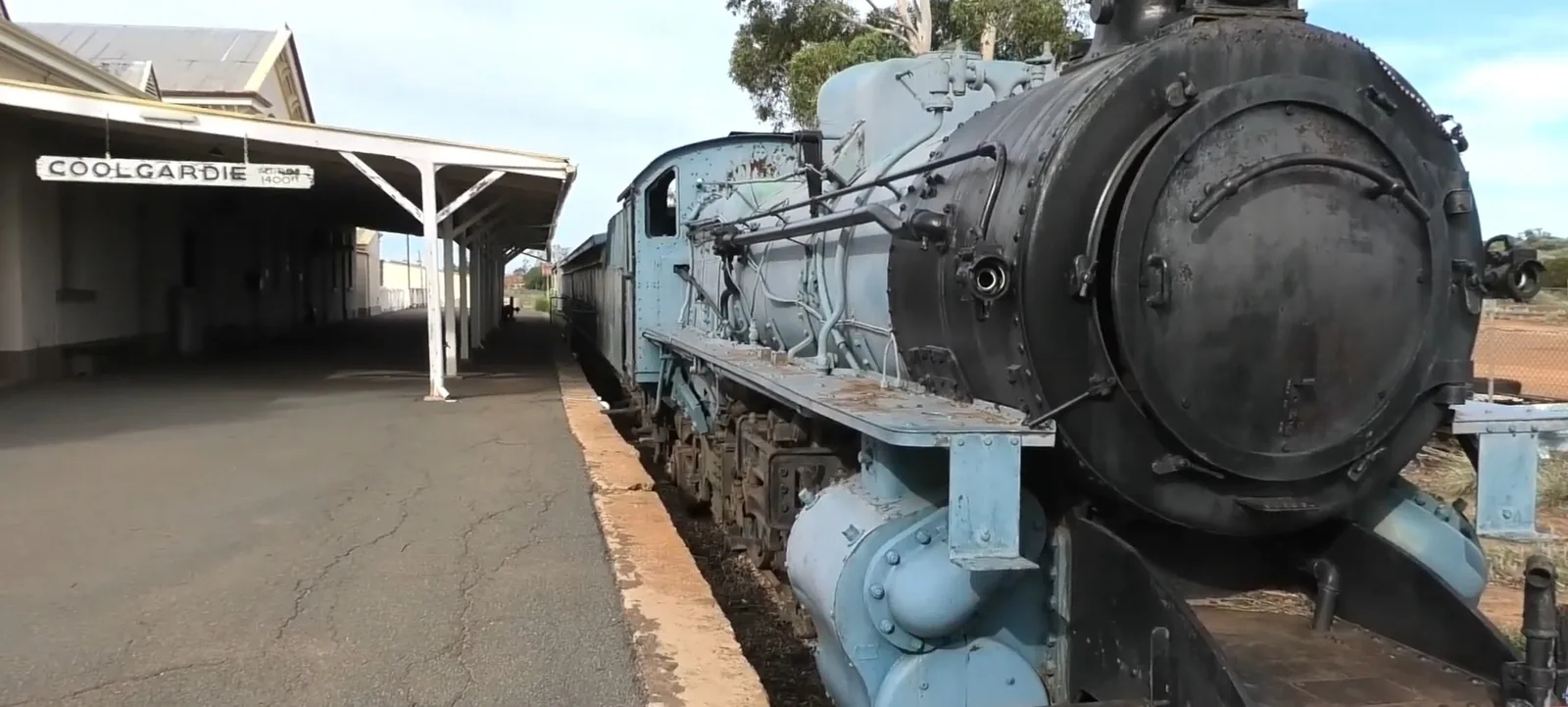
The Coolgardie Historic Railway Station tells another part of the story. The railway reached Coolgardie in the 1890s and changed the town's relationship with the coast. Before rail, freight and people came slowly and expensively. After rail, Coolgardie was tied more tightly to Perth and the rest of the colony. The station's later quietness is part of the contrast. What was once busy enough to be among the state's important stations is now read mostly as heritage.
Cemeteries, illness and the cost of the rush
The cemeteries around Coolgardie are among the most sobering places in the Goldfields. They do not tell the story of easy money. They tell the story of heat, typhoid, infant deaths, accidents, isolation and people being buried far from the homes they left behind. The old cemetery was used only in the early rush years, and the newer cemetery grew through the harder years when disease and overcrowding were part of daily life.
That is one of the sharpest differences between old Coolgardie and today. Today a visitor can drive from Kalgoorlie, buy fuel, check road conditions, walk the town and leave before dark. In the 1890s, getting sick here could be a different matter entirely. Medical help was limited, sanitation struggled to keep up with population, and the rush brought more people than the place could comfortably support.
Alfred Canning and the Goldfields supply story
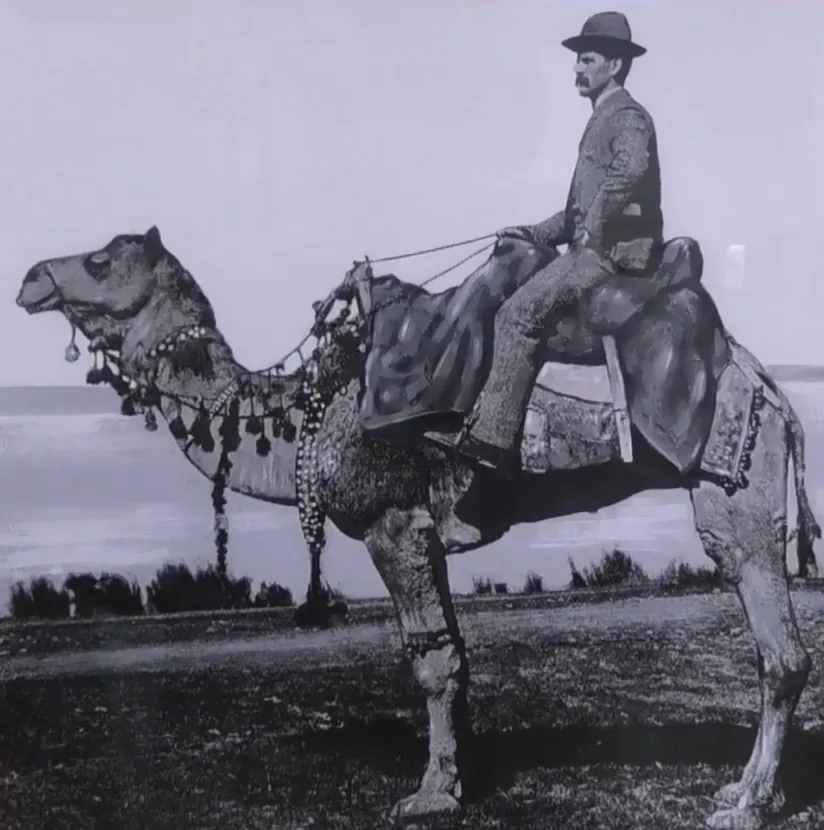
Alfred Wernam Canning was not one of Coolgardie's founders, and he did not make the 1892 gold discovery. His connection to Coolgardie is more indirect, but still important. Canning was a government surveyor whose work shows what happened after the rush: once thousands of people were living in the inland goldfields, the colony had to solve problems of water, routes, fencing, transport and food supply.
Canning joined the Western Australian Lands Department in 1893, the same year Kalgoorlie's Golden Mile began drawing attention east from Coolgardie. Around the turn of the century he was sent to survey the line for the rabbit-proof fence, a huge inland job meant to slow rabbits moving west into farming and pastoral country. Visit Yilgarn notes that the Rabbit (Vermin) Proof Fence was surveyed in 1901 by Canning. That work did not belong to Coolgardie alone, but it came from the same world of inland surveying: long distances, scarce water, camel work and government attempts to control a hard landscape.
The clearer Coolgardie link came through meat. The National Museum of Australia explains that the Canning Stock Route began in 1905 after high beef prices and a supply monopoly affected Perth and the goldfields. Kimberley cattle could not simply be moved through the western pastoral districts because of cattle ticks, so the government looked for a desert route south. Earlier, explorer David Carnegie had considered a stock route between Coolgardie and the Kimberley and judged the country too harsh. Canning was then chosen to test the idea properly.
In 1906 and 1907 Canning surveyed the route between Wiluna and Halls Creek, looking for water roughly a day's travel apart for travelling stock. He returned from 1908 to 1910 to build wells. The route carried his name, but it also carried the pressure of the goldfields: places such as Coolgardie and Kalgoorlie needed more than mines. They needed meat, animals, workers, maps, wells and tracks that reached far beyond the town streets.
That story has a harder side too. The National Museum material records that Aboriginal people guided Canning's party to water, and that Canning used chains and handcuffs to keep guides with the expedition. A royal commission followed in 1908. For a modern visitor, this is part of the history rather than a footnote. Coolgardie's heritage is not only hotels and stone walls. It is also the wider network of survey lines, stock routes and water places, many of them crossing Aboriginal Country, that made the Goldfields economy possible.
Small facts that make the town memorable
Coolgardie's history has some details that stay with you. The Golden Eagle nugget, found near Widgiemooltha in 1931, weighed more than 1,100 troy ounces and became one of Western Australia's great gold finds. Ben Prior Park, a free open-air museum, grew from one man's collecting and gives visitors a rougher, more hands-on look at mining gear and bush-made objects. Lions Lookout is tied to the view associated with Bayley and Ford's arrival in the area. The cemeteries hold known names and unknown ones side by side.
These details are useful because they stop Coolgardie becoming only a faded boom-town label. It was a place of human decisions. People built houses, opened businesses, argued over claims, buried children, made money, lost money, moved on, stayed, collected memories and left behind objects that later generations now call heritage.
Old Coolgardie and Coolgardie today
Old Coolgardie was crowded, noisy and impatient. It was a place of queues, horses, camels, coaches, mining talk, legal notices, hotel bars, dust and newspaper rumours. People watched the ground and watched each other. A new find could change the mood overnight.
Today's Coolgardie is calmer. It is a heritage town, a service point, a local community and a stop for travellers crossing the Goldfields. Mining still matters in the broader shire, but the town itself is no longer trying to be the capital of a rush. That gives visitors a rare chance. You can walk through a place that once felt like the future and see what remains after the future moved on.
A slower visit can include Bayley Street’s grand buildings, the museums and parks when open, and the cemetery signs. Water supply and the distance from Perth before modern roads and vehicles shaped the town’s growth. Coolgardie provides an important part of the wider Goldfields story alongside Kalgoorlie.
Why Coolgardie still matters
Coolgardie matters because it holds the early Goldfields in a visible form. It shows ambition before consolidation, hope before certainty, and heritage before polish. Kalgoorlie tells the story of a mining city that endured. Coolgardie tells the story of the rush that made people come.
That is why its old buildings and cemeteries deserve care. They are not just attractive stops on a road trip. They are evidence. They show how quickly a town can rise, how hard life could be, and how much of Western Australia's modern mining story grew from risky journeys into dry country. Coolgardie today is quieter than it was, but it is not empty of meaning. If anything, the quiet makes the old story easier to hear.